


From the staggering waste of billions of tons of wood annually created from forest harvest to all the construction residuals, they all eventually need to be converted into something to useful. And that workhorse machine for that conversion is the drum wood chipper.
If you work in biomass power plants, in pulp and paper industries, or in big saw mills and need details about…What exactly a drum wood chipper is? How it operates? When it is a good time to use it… This guide explains it all in terms of: mechanical design and components, how it works, application on the industry side, a comparison with the disc chippers, and what to look for when shopping in the market.
Considering purchasing wood chipping equipment for the first time or looking to change your current arrangement? Keep reading.
What Is a Drum Wood Chipper?
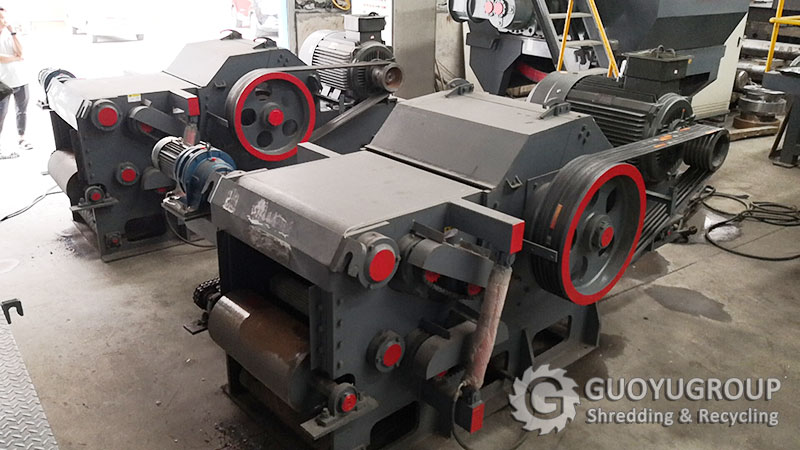
A drum wood chipper is a robust type of wood chipping machine, used to process or convert raw wood components such as logs, slabs, branches, pallets, and waste wood into consistent wood chips using a large rotating drum mounted horizontally which contains multiple cutting blades or knives.
In contrast to their disc mills counterparts, the cutting action of the drum chipper depends on the constant angular momentum of a rotating cylindrical drum. As the head turns at high velocity, curved knives mounted to the outer surface propel incoming material through a scoop or radial arc, generating a chip, A screen is often used to sort chips by size and direct them to a conveyor or discharge chute.
The wood chips are approximately 3-5cm long and generally uniform in thickness with smooth, flat cutting surfaces. The quality of outputs provided by drum chippers ensures their vital importance in many different industries.
Simply:if you will be chipping large or irregular pieces of wood and you‘ll need to be producing a high-volume of wood chips all day, almost invariably a drum wood chipper will be the correct equipment.
How Does a Drum Wood Chipper Work? The Operating Principle
Knowing how a drum wood chipper functions enables operators to run the machine as efficiently as possible while minimizing wear. The process is, in order:
1. Material Feeding
The infeed hopper contains the raw material; this may be fed manually or by means of a flat-plate conveyor or a hydraulically fed system (Hydraulically fed drum chippers). A hydraulically fed system utilizes powered rollers to maintain a steady flow of material into the chipping chamber, avoiding blocks and jams.
2. Material Guidance and Gripping
At the infeed chute, the upper and lower feed rollers hold the incoming material and move it toward the chipping drum at a uniform, controlled rate of speed. The upper roller assembly is allowed to ‘float’ vertically on the hydraulic system to accommodate varying thickness of material, without stopping the operation.
3. Drum Rotation and Chipping
The machine component- the rotating drum- rotates at high RPM. Flying knives (2-4) are placed around the circumference of the drum and are held in position using pressure blocks and pilots. As the flying knife rotates, it shears the incoming wood against the counter knife (bottom knife or anvil), which is held on the machine frame. This, in conjunction with the flying knife, produces a shearing action with a clean cut.
4. Chip Size Control
There are four factors that determines chip length, which are the position of flying knife on the drum, drum speed, feed speed and the loading gap between the flying knife and the counter knife. All these factors can be tailored so the chip produced is suitable for the next processing stage.
5. Screening and Discharge
Once the wood chips have been chipped, they fall through the screen, which is installed underneath the knife roller. Any size chips are allowed to fall through the holes in the screen and out of the discharge belt or chute. If the chips do not pass through the screen because they are too large, the wood will remain in the drum chamber until the unit is again turned on. It will turn within the drum chamber, smashing the oversized chips against a chipper bar or baffles until it has obtained the acceptable size and passes through the opening.
All this re-processing is built in (100 receivers connect before) so the output stays as high quality without any action.
Key Components of a Drum Wood Chipper
A properly designed drum wood chipper is a collection of interrelated components. The functions of each are as follows:
Machine Base / Frame the Frame assembly: Welded for high-cavity or high- strength steel plates, it is the structure base of the whole machine. The stiffness must be good for stable and steady operation in the whole lifetime.
Knife Roller (Drum): The rotating body. This is made as a horizontal, parallel to the infeed hopper with flying knives attached on its surface using pressure blocks and manufactured screws. Most industrial drums carry 2-4 knives however bigger machines with 4-knife setups are common.
Flying Knives (Chipping Blades): Standard heavy-duty alloy steel blades generally with at least 8% chromium for hardness. The knives cut the wood in a radial sweep in a scooping arc (giving chips as the drum passes the counter blade).
Counter Blade / Anvil: a fixed blade resting on the machine base.. The operation of the flying knife with the counter blade gives the chip. The accuracy of the knife-to-counter blade gap controls the nature of the chip.
Upper and Lower Feed Rollers: Sandwich to hand feed and control feed rate of raw material fed into the chipping chamber. The upper roller is floating at all times so it deals with change in material diameter and keeps the machine running.
Conveyor Belt (Infeed): A flat-plate belt conveyor feeds raw materials to the feed rollers; this can be used to allow automated or semi-automated feeding.
Hydraulic System: The oil pump provides hydraulic pressure for the cylinder which is responsible for raising the upper feed roller. The hydraulic system is also used for opening the drum cover for blade replacement and servicing. The major advantage being opening the drum cover without taking the whole machine apart.
Screen / Sieve : A screen with holes near the knife roller takes care of chip size. Chips with proper size are washed through and smaller chips are taken to next stage. Oversized chips are sent back again.
Discharge System: Finished chips are transferred to collection bins, conveyor lines, or bulk storage via a chute or belt conveyor.
Electrical Control Panel: Modern drum chippers include an automated control system managing motor operation, feed rate, emergency shutoff, and system diagnostics.
What Materials Can a Drum Wood Chipper Process?
A major benefit of the drum chipper is that it is adaptable to a wide range of raw materials. Accepted inputs are:
Wood-based materials:
- Logs and round wood (up to ~ mm diameter)
- Branches twigs and tree tops from forest harvesting
- Slabs/slats and offcuts from sawmills
- Waste veneer; Log cores; Joinery edge strips.
- Pallets of wood, nailed boards, templates used in construction
- Disposed Furniture Parts and Board Offcuts
Non-wood biomass materials:
- Bamboo
- Sugarcane bagasse
- Stems of reed and straw.
- Remaining fibrous agricultural residues
Limitations of availability of materials: Full range of production (30 mm – 450 mm) is required for Drum chippers to operate efficiently. Chips from very thin material (<30 mm diameter), oversized logs (>450 mm diameter), very short lengths (<250mm), or deformed stumps with incompletely decayed root systems would not feed evenly through chipping head, resulting in poor output quality.
Industrial Applications of Drum Wood Chippers
Drum wood chippers are used in virtually any industry where large quantities of evenly sized wood chips are needed:
Pulp and Paper Mills
One of the largest costs in Paper Making process is massive quantity of uniform sized wood chips used as raw material for pulping and such colossal drum chippers with capacity 10 25+ tons/hr are widely used.
Particleboard and Fiberboard (MDF) Plants
Furniture and building boards utilize finely divided regular size chips as initial raw material, so they often use drum chippers which located at the beginning of the material preparation line, as they produce uniform size of chip for more effective operation in following processes
Biomass Energy and Power Generation
A biomass power plants is burning wood chips to produce electricity or heat. Drum chippers process wood waste and logging residues into 3–5 cm fuel chips that are the ideal size for a boiler or gasifier.
Wood Pellet Production Lines
Prior to being pelletized the timber has to undergo two processes, chipping and drying. Drum chippers are one of the initial processes in pellet production lines that have been developed to process both logs and wood waste..
Sawmills and Timber Processing
Sawmilling produces large quantities of wood waste residues slabs, bark, offcuts, and log cores which are valuable as chip material. Drum chippers are used to recover this waste and process it into chips for sale into the paper and board industry, or energy markets.
Landscaping and Municipal Waste Management
Commercial landscape construction companies and cities own portable drum chippers. They use them to reduce on-site volume of tree trimmings, storm debris, and pruning waste. Mulching on site reduces the volume that needs to be hauled away.
Drum Wood Chipper vs. Disc Wood Chipper: Key Differences
Deciding between a drum or disc chipper is one of most important decisions to be made when purchasing wood processing equipment. Here‘s a straightforward comparison:
| Feature | Drum Wood Chipper | Disc Wood Chipper |
| Cutting Mechanism | Rotating cylindrical drum with flying knives | Flat steel disc with blades on the face |
| Knife Orientation | Mounted radially on drum surface | Mounted on disc face, at an angle |
| Chip Size Control | Good — controlled via knife position and feed speed | Excellent — chip length adjustable within wide range |
| Chip Uniformity | High, but slightly less consistent than disc | Very high consistency |
| Material Capacity | Up to 450–600 mm diameter; handles large/irregular logs | Best with smaller diameter logs (under 300 mm) |
| Throughput | Very high — up to 25+ tons/hour industrial | Moderate — typically lower than drum at equivalent power |
| Feed Opening | Large, rectangular hopper; accommodates bulky material | Smaller opening; requires straighter, more uniform feed |
| Handling of Irregular Material | Excellent — handles forked, knotted, and brushy material | More prone to jams with irregular shapes |
| Energy Efficiency | Slightly higher power consumption | More energy-efficient; disc flywheel stores momentum |
| Typical Applications | Paper mills, biomass plants, large sawmills, high-volume operations | Particleboard production, smaller-scale paper production |
| Portability | Heavier; typically stationary or large trailer-mounted | Lighter; more easily transported |
| Initial Cost | Higher | Lower |
| Maintenance | Blade replacement every 400–800 hours; harder to access | Blade replacement every 200–400 hours; easier to access |
Summary:
Drum chippers: higher throughput, less limit on nature (big/irregular), best for high-volume continuous industrial operations
Disc chippers: controlled chip length, more efficient, convenient for less-volume operations
Drum Wood Chipper Capacity and Specifications
There are a variety of sizes and capacities of drum chippers available. Other key features to consider are:
- Processing capacity: rates from 5tonshr (smaller units) to 25 tonshr or greater in industrial drum chippers.
- Maximum infeed diameter: Normally 300–600, depending on the model.
- Knives: 2, 3 or 4 flying knives more knives usually will be able to reach a higher throughput for a lower drum RPM.
- Power of the motors: Electric=37 kW 315+ k W; some of the mobile units are equipped with diesel motors;
- Chipping length output: adjustable, produces chips of 3–5 cm normally.
- Characteristics of the machine: Fixed (stationary) or mobile (wheeled, trailer-mounted).
Commercial ‘high-end’ drum chippers usually cut a diameter of 25 60 cm, although special machines for industrial use can cut much larger than this. Any B2B (Business-to- Business) customer will find it wise to buy at either one or even two capacity classes above your average daily requirement: this takes pressure off the machine and increases blade longevity.
Operating Safety Considerations
Drum wood chippers are items of heavy industrial machinery, which can be dangerous if not operated correctly. Following the procedures below is absolutely necessary:
- Never go into the feed chute while the machine is operating. The draw of the drum can be momentary and strong.
- If feed is being added to material (rather than removed), feed from the side, not down the center of the opening.
- Get used to the emergency stop, which you should know where it is. It should be well marked out.
- Use proper PPE (Personal Protective Equipment): ear protection (ear plugs are necessary as drum chippers are very loud), eye protection and cut resistant gloves.
- Never jam material into the feed opening. Let the hydraulic feed rollers do the pushing.
- Hydraulically-fed drum chippers are much safer than the older conventionally-fed, or “chuck-and-duck” type, and are generally the norm with new equipment purchases.
Maintenance Best Practices
How to correctly maintain to extend the life of the blade, to prevent damage to the machine components, to keep the quality in chip within the same grade:
- More demanding blade and grinding maintenance requirements. Check and sharpen flying knives frequently. Blade life of drum chippers is between 400–800 hours depending on the timber species, its hardness and moisture content. Blunt blades increase energy consumption and decrease the quality of the chips.
- Check and set knife-to-counter blade gap. The size of this gap directly affects chip quality. It must be set to manufacturer recommendations.
- Check the drum assembly at regular intervals for any damage, including cracks and dents, which could affect the operation or safety.
- Monitor belt tension. Drive belts tend to slip or fray as they age, check the belts regularly to avoid breakdown.
- Maintain hydraulic system, monitor hydraulic fluid levels, hoses and cylinder seals according to manufacturer stipulated maintenance schedule.
- Clean the screen. Partially block the screen, this results in a decreased throughput along with higher energy usage since excess chips are returned for reprocessing.
A robust industrial grade drum chipper made by a reputable manufacturer should provide 10+ years of trouble free service with regular upkeep.
How to Choose the Right Drum Wood Chipper
Selecting the right machine for your operation involves answering five core questions:
1. What raw materials will you treat?
Information on log diameter, species, moisture content and excess of irregularity (branches and bent logs vs. Tenons and smooth logs) influences the most appropriate configuration of the machine. Hardwoods and high-moisture content raw materials need blades with greater specifications.
2. How much volume processing do you require?
The rated machine ton/hour capacity should be scaled to your average & peak on-day processing volume. Generally a machine must be rated 20–30% higher than your average daily need, to accommodate fluctuations.
3. What size and quality of chip is required?
Downstream processes, papermaking, pelletising, board production or combustion, have their own set specifications for chip length and thickness. Check the chip length and thickness specs your specific end process needs, first.
4. Stationary and mobile?
Stationary drum chippers (mounted on a frame) are designed for permanent use at sawmill or processing facility. Mobile (e.g. mounted on wheeled frames or trailers) chippers are applicable when processing several locations.
5. What‘s your total cost of ownership target?
Remember to include power, much faster and more expensive blade changes, maintenance labor, and machine life that may be significantly different from machine life. Higher specification machines and wear resistant alloy blades have often been found to cost less a ton in the long term.
Frequently Asked Questions
Q: What is the difference between a drum wood chipper and a disc wood chipper?
A: Fundamentally, the difference is the type of cutting action. A drum chipper has a horizontal rotating cylinder with knives; a disc chippers has a large flat steel disc with knives on its face. Drum chippers tend to process larger, more difficult-to-chip material in higher throughput operations, while disc chippers tend to be more energy efficient for the not-so-big chipper.
Q: What size wood can a drum chippers chip?
A: Typically, most commercial drums will attach to wood chips from 30 mm to 450 mm in diameter. If you need to chip wood on the heavier side, there are a few commercial industrial-quality drums that will take up to 600 mm thick wood. Very fine, less than 30 mm thick or much thicker, more than 450 mm might not be chipped right.
Q: Can a drum wood chipper be used to chip other than wood?
A: Drum chippers are suitable for other types of non-wood biomass processing. The most suitable other type of non-wood biomass is bamboo, sugarcane bagasse, reed stalks, etc. They are very adaptable to be part of a variety of biomass processing installations.
Q: How frequently should I change my drum chipper blades?
A: 400–800 operating hours. The longevity for a chipper blade is dependent upon how hard and wet the material is. Inevitably alloy steel blades containing high levels of chromium will have far greater lifespan than any steel related blades.
Q: What is the cost of an industrial drum wood chipper?
A: The costs are highly variable and it depends on the capacity, configuration, and manufacturer. The most basic drum chippers for small-scale capacities cost several thousand dollars. Large industrial drum chippers with a capacity of 15–25+ tons per hour can have a cost of $50,000–$200,000 or more. Integrated configuration with Automated feed system, dust collection, discharge conveyance will also contribute to the cost.
Q: Which is better for biomass fuel production drum chipper or disc chipper?
A: Drum chippers are used for biomass fuel production more often than disc chippers. Drum chippers are configured to accommodate more raw material types and sizes such as logging residues, pallets and construction waste at higher throughput rates.
Conclusion
The drum wood chipper is the most capable of delivering the great volumes of diverse raw material including logs, limbs and tops, pallets, wood waste, and debris and producing a consistent chips uniform in size and moisture that large scale paper mills, biomass-fueled energy plants, particleboard producing factories, and sawmills, all over the world, demand.
As you begin to compare drum type wood chippers for your operation, begin by identifying your raw material mix, day-to-day capacity goals, desired chip size, and performance expectations. Then discuss these specifications with reputable wood chipper manufacturer or OEM-approved suppliers to determine which machine size, knife arrangement, and feed system suit your operation.