


Lost productivity costs tree care companies, land clearing crews and landscapers thousands of dollars a year in choosing the wrong chipper for their operation. A machine that is too small slows on dense hardwoods and a machine that is too big wastes fuel on light brush runs. When chips are heavy, fibrous, misshapen, or unpredictable- such as palm fronds, forked limbs or large- diameter logs- a drum wood chipper is the best choice. But drum chipper is not a single product. It is a general term that can refer to compact units as small as 6- inches in diameter, all the way to industrial size machines with 21- inch drums; twelve- knife drums and sixteen- knife drums; gas engines and PTO driven units; and a wide variety of safety and production features.
This guide is designed to navigate around all the conflicting information. Whether you are in the market for your first commercial drum chipper or replacing an aging fleet machine, the following sections will lead you across what seems like a minefield of choices drum chipper capacity, specifications, blade configurations, maintenance, cost of ownership and more. By the end of your reading, you will have the information you need to select precisely what drum wood chipper is best for your operation.
What is a Drum Wood Chipper and How Does It Work
Drum wood chippers are large, powerful machines that grind shrubs, logs and brush into evenly textured wood chips with a series of rotating, sharp blades affixed to a cylindrical drum. Once material is introduced into the in feed chute, the drum spins to draw the material in via a natural suction force! It is this self-feeding function of drum chippers that makes them a popular choice among professionals.
Here is what happens inside the machine:
- Feed rollers hold the material being fed and draws it to the drum.
- The drum (normally of steel and rotated at several hundreds RPM) is equipped with two or four cutting knives.
- Knives shear the wood with a scooping motion at right angles to the grain.
- Chips are ejected through a discharge chute at high speed, this can usually be rotated to allow the material to be fed into a truck or chip bin.
This system is a significant departure from a disc chipper, which employs knives attached to an almost flat disc which cuts through the grain at a 45 degree angle. The drum chippers cut much more parallel to the grain providing a somewhat more variable length for the chip, but much better efficiency when working with heavily grained, knotty, or oddly shaped wood. The drum‘s closeness to the feed rollers in front of it allows for practically no room for material to jam up behind the cutting area this is a reliability advantage when working on busier production days.
Drum Chipper vs. Disc Chipper: Which Do You Actually Need?
Before we delve further into selecting a drum specific chipper, it would be prudent to double-check your application to see if a drum chipper will fit the bill. Although both machine types can perform most tasks, there is a definitive A to Z.
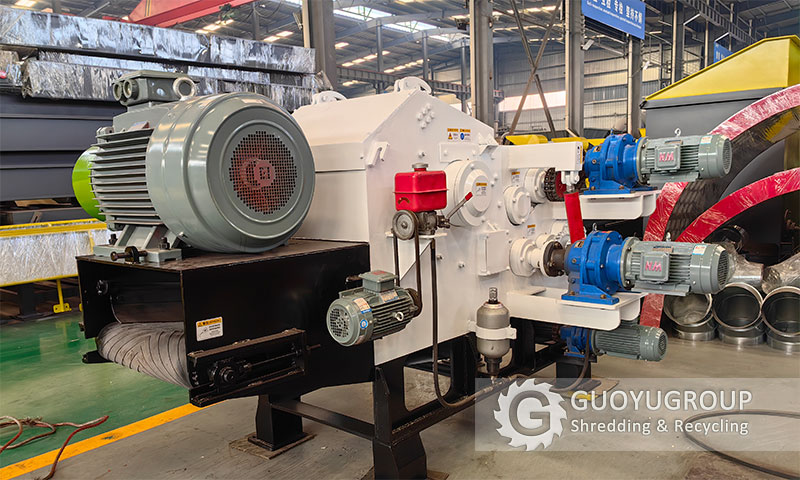
Choose a drum wood chipper if you:
- Regularly handle logs of a diameter of 6 inches or more
- Strong with dense hardwoods. Knots, fibrous vegetation such as palm fronds.
- Handling forked, twisted, or brushy limbs that want to hang in a disc machine
- Requirement on steady throughput over several hours long production sessions with minimal operator re-feeding.
- Give priority to longevity of blades drum axes cause more uniform abrasion of knives than disks
Consider a disc chipper if you:
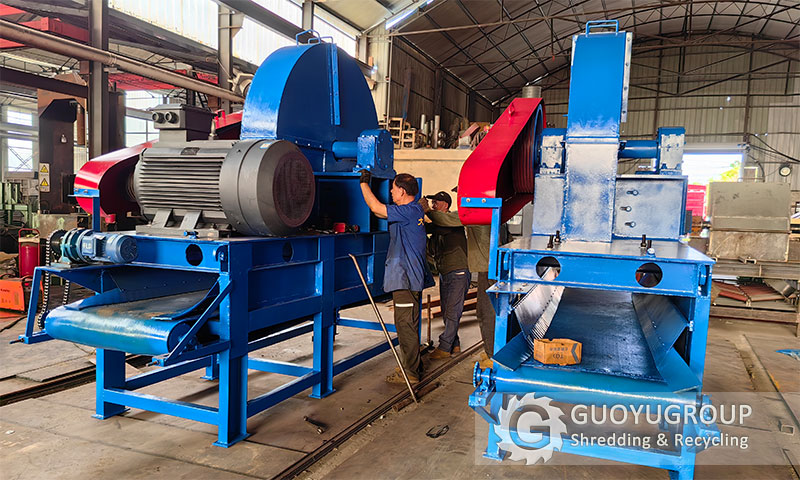
- One of the main causes of study was the chip smaller-diameter, straight, trimmed branches, going to be the most relevant material composition in future projects.
- Require faster throwing of chips; enhance the method to allow this to be achieved.
- Any machine that is lighter-weight and easier to be towed
- Also processing material for paper grade chip quality where an extremely uniform chip would be of benefit.
In most commercial tree care, forestry, and land clearance operations that involve mixed loads and heavy wood, where the overwhelming majority of work has the following characteristics:
Capacity and Drum Size: Start Here
The single most important spec for any drum wood chipper is its infeed capacity how big around the material is it able to process. Chipper makers usually give this as an inch rating: a12inch chipper can process material up to12 inches in diameter.
The Golden rule: Never purchase at the true capacity of your average material. Industrywide steady advice is to go one, or two capacity classes up. For example: when your crew is consistently chipping 8-inch diameter material, buy a 12-in or preferably a 15-in machine. The reasons are simple:
- A chipper functioning at near maximum rated load is hard on the engine, dulls the blades more rapidly and may cause jams.
- A machine with headroom is more productive, burns less fuel per ton of material chipped, and has less wear.
- The larger machine more than earns its investment back in lower down-time and lowering of per hour operating costs.
Practical capacity guide:
| Average Material Diameter | Recommended Drum Chipper Capacity |
| Up to 4 inches | 6–8 inch |
| 4–8 inches | 10–12 inch |
| 8–12 inches | 14–16 inch |
| 12 inches and above | 18–21 inch |
Weight: the size of machines has a significant bearing on weight. It is not uncommon to see machines weighing over 10,000 lbs in the 18-21 inch range. As well as the tow rating of your vehicle this may also impact your heavy goods driving license requirements, make sure you check the loaded weight against your suitability before purchasing.
Engine Power: Matching Horsepower to Your Workload
The drum is only as powerful as the motor driving it. If there is not enough horse power the drum will slow under load, the blades efficiency will be poor and the machine will stall or clog on heavy timber. Large engines will burn excess fuel for light applications.
Gas versus diesel: Most commercial drum chippers use a gas or diesel-powered engine. Diesel motors deliver more torque at lower RPMs (effective for chipping dense hardwoods) and are generally more fuel-efficient for long production days. Gas engines are lighter, easier to maintain in the field, and less expensive for smaller scale machines.
Horsepower benchmarks by capacity:
- 6–10inch capacity 25–65 HP
- 12–15 inch capacity: 75–130 HP.
- Capacity for 16-19 inches: 150–250 HP
- 19-21 inch capacity: 250-400+ HP
PTO driven options: For operations that already operate tractors, PTO driven drum chippers are a cheaper alternative. They remove the need for its own engine entirely by draw there power input from the power take-off shaft of the tractor. The disadvantage would be reduced mobility and dependence on the tractor.
An easy field test (if you dare to abuse a new engine). In another direction, when testing a lumping machine, pour the biggest size of material that you regularly handle and monitor the engine RPM (tach), If the engine stalls in an embarrassing fashion then the machine is too small.
Knife Configuration: Two Knives vs. Four Knives
After drum size and engine power have been determined, the type of knife configuration is the next major parameter. In general there are either two or four-knife drum configurations and this makes a difference in chip quality, throughput and maintenance cost.
Two-Knife Drums
For the smaller drum chippers, two knives are usually employed. For the standard feed rate of about 100 ft / minute of chip, two-knife drums will have to rotate at a higher RPM than single-knife drums. This is acceptable for lighter material and small- capacity chippers.
- Pro: knife changes easier, less cost per set, good for lower loads
- Cons: higher RPM accelerates wear of bearings, blades, and belts; heavier loads more quickly wear down edge of blades
Four-Knife Drums
Commercial larger machines are also more likely to use four knives. A larger diameter drum coupled with four knives will produce the required feed rate at a lower RPM, producing more cuts per revolution and greater torque.
- Pros: Less mechanical wear at lower operating RPM; more cuts per revolution increases efficiency on hard wood; some manufacturers claim less horsepower and fuel consumption using the four-knife large-drum systems
- Cons: More expensive initial blades; knife change process slightly more complicated
Blade material is also important. For drums, good chipper knives should be harder steel and chromium alloy. Some manufacturers such as Vermeer utilize dual-edge knives, which means a second edge can be used once the first has worn out. Flipping the blade over will double its lifespan, so be sure to check how many edge blades your competitor machine uses when you are calculating your cost per hour.
There should be no compromise with sharp knives. A dull blade not only causes scrap quality problems, but also increases fuel consumption, increases the likelihood of a material jam, and loads other elements of the drive train more heavily. Allow as a constant operating cost for normal knife sharpening or change out.
Feed System Design: Self-Feed vs. Manual-Feed
The feeding system how material is fed into the chipper is an ergonomic and productivity consideration that quite often is mistakenly considered less important.
Self feeding (hydraulic auto feed) employ hydraulically controlling feed rollers and automatically draw in the material upon contact. Place the branch at the infeed throat and walk away, the machine takes over. Benefits include:
- Fewer operator shifts on days when production is high
- More uniform feed rate because it keeps the load of engines constant and makes the size of the chip more consistent
- Lower risk of pulling injuries to operator
In a manual-feed system, the operator must apply pressure on the material to push it in the direction of the drum. These are more prevalent on smaller, less-expensive machinery. They are more labour-intensive and the operator has to keep a closer eye on the process, especially when processing heavy and irregular materials.
If your commercial operation is handling large quantities every day, an auto-feed hydraulics system is not a luxury is a gain in productivity. Consider the feed roller design too: Machines with more than one feed roller linked through a conveyor system provide greater control over different shape and size of material.
Safety Features: What to Require Without Compromise
Drum wood chippers exert extreme levels of pull. It is this, combined with the self feeding action, which makes these machines so highly productive that presents the real liability when an operator‘s clothing, glove, hand, or tool unexpectedly is thrust into the infeed zone. Safety features are not a selling point they are a must.
Non-negotiable safety features:
- Emergency stop/ panic bar: A large, widely accessible bar at the infeed which, when touched, instantly ceases and reverses the feed rollers. The first attempt at controlling a feed-in incident.
- Anti -kickback system: Prevents material from being ‘kicked back’ through the infeed chute at high velocity.
- Infeed hopper guards: A barrier restricting access to the work tool area of the cutting to the operator.
- Hydraulic feed control: Enables the operator to cut feed roller movement immediately from within a safe position.
- Discharge chute lock: Ensures the discharge chute to be unable of turning, when the machinery is switched on.
Machine PPE requirements: Whatever the equipment, machine operators are always required to wear gloves made of cut-resistant material, hearing protection {machine chippers operate at high decibel levels}, safety glasses or face shield, and appropriate clothing (no loose clothing). Do not operate near the infeed without PPE.
Make sure the machine you are looking at complies with or exceeds the current ANSI Z133 safety standards for tree care equipment. Inquire with the dealer about the emergency stop and make sure it is working before you take delivery.
Discharge and Chip Ejection: Matching Output to Your Workflow
The way the discharge chute is configured has more to do with how quickly your guys can pick up or dump chips than you think it does. That‘s just as important on demo day as it is for every other day of using the machine.
Key discharge considerations:
- Chute rotation range: Is it possible to put the chute in position to load the trucks, fill the bins, or unload the side? A full 360 degree rotation provides additional flexibility on the job site.
- Velocity of discharge: Chips are ejected from drum chippers at lower velocities than disc chippers (which are assisted by large diameter fan paddles on the disc). If you are regularly loading trucks with high sides, check that the discharge velocity is high enough to deliver chips to the top of the truck body. Some models have optional longer discharge chutes.
- Chip collection vs. open discharge: The marketability of a drum unit‘s consistent chip size depends on whether you‘re selling the mulch by volume. If you‘re just reducing and hauling, discharge velocity is more important.
Maintenance Requirements and Total Cost of Ownership
The purchase price is just one part of the overall costs of a drum wood chipper over its working life. It is fuel, blade costs, belts, bearings, downtime that really costs.
Ongoing maintenance checklist:
- Daily: Observe operation of blade for dullness or cavitation; adjust tension on belt; observe condition of tension on conveyor belt; observe condition of feed roller hydraulic lines.; possible removal of debris from infeed in preparation for a kill at the end of the day
- Weekly: Grease all zerks; examine drum mounting bolts; top up engine oil and coolant
- Monthly: Check and change worn belts; check balance of drum; test emergency stop operation
- Every year: Replace every part of a knife or sharpen them; check drum bearings; service engine according to the manufacturers plan.
Blade wear is the single largest variable cost for most operators. Belt tensioning systems that automatically tension belts help to extend belt life. Drum designs that encourage consistent knife wear patterns (a drum advantage over disc) means less frequent replacements of the entire knife set.
When comparing machines, ask the dealer for:
- Average life of the knife (hours) you expect due to type of material typically being cut
- Cost each for a knife set or dual-edge knife flip
- Parts availability and local service support
- A history of the time in that model, in your area
A budget priced machine with poor part availability and/or costly consumables will out perform a top of the range unit from a more supported brand over five years in cost.
Top Brands to Evaluate
The drum wood chipper market is dominated by several manufacturers with multi-decade commercial track records, and distinct advantages:
- Bandit Industries — uses huge drum with powerful chips that crush large diameter material with less horsepower. Intimidator series producers maximum 19 inch diameter material and is most popular in land and tree clearing areas.
- Vermeer — Wide range from the BC1000XL through to the BC2100XL. Employs drum configurations for its mid-to-large capacity equipment. Famous for dual-edge knife system and supporting dealer network.
- Morbark — Has been in forestry and commerce for decades and is trusted in that arena. The Morbark 2400 drum chipper (shown here) is a solid workhorse when demanding production is required.
- Fecon, Bandit and Altec — There are other good players for different specific capacity ranges to consider depending on what you mostly do.
Always a machine demo with your actual material, no matter what brand you buy. It will perform differently with pine than it will with oak, elm or palm fronds.
Frequently Asked Questions
Q: What are the main benefits of a drum wood chipper versus a disc chipper?
A: Drum wood chippers have larger infeed throat openings, more aggressive self feeding action and work better with dense, knotty and fibrous materials. They will process forked and irregularly shaped limbs without hang ups so are better suited to commercial tree care and land clearing.
Q: How do I find out what size drum wood chipper I need?
A: Determine your average chip size and find a chipper that is rated one or two classes higher than your maximum size. For example, a crew that normally chips 8-inch size material will benefit from a 12- or 15-inch rated capacity drum chipper since it will operate efficiently and last longer.
Q: How regularly should the knives on the drum chipper be renewed?
How regularity depends on the hardness of the material, feed speed, and the quality of the blades. For commercial purposes the blades are checked daily and sharpened or exchanged every 20–40 hours. The dual edge blades can be used by flipping them to use both sides before replacing.
Q: What safety features should I look for on a drum wood chipper?
A: An emergency stop/panic bar on the infeed throat is the number one safety feature you should look for. It should stop feed rollers immediately and reverse them, when necessary. Anti-kickback features, guards, and hydraulic control should also be inspected. Be sure it meets ANSI Z133 specifications before buying.
Q: Which makes more sense for a commercial diameter drum chipper gas or diesel?
A: Diesel provides more torque at idle and lower RPMs for high production, longer hours of operation? Gas engines are lighter, easier to maintain in the field and less expensive for lower capacity machines. A commercial diameter drum is usually a prime candidate for a diesel application.
Q: Will a drum wood chipper process palm fronds and fibrous vegetation?
A: Yes. For palm fronds and other fibrous material a drum wood chipper is usually the best kind of wood chipper. That is because drums are very good for fibrous material that disc chippers often have difficulty handling neatly because a drum has a larger throat opening and a self-feeding action which can more consistently take awkward, stringy material.
Conclusion
The only thing to consider when selecting a drum wood chipper is the one rule to follow – select a machine that is sized to the work, not to any specific dollar figure. Consider material, diameter, species and condition. Size upward for capacity to allow room for the machine to operate. Work downward through engine power, knife arrangement, feed system safety needs and discharge design as a list to be valued rather than a list of extras.
The brands and models now on the market are more innovative and more well supported than ever before. Whatever your application for expanding a small tree care business, upgrading an aging municipal fleet, or purchasing a first commercial chipper for land management the reliability, efficiency, and reduced labor costs associated with the addition of a drum wood chipper will quickly offset your investment.
Invest the time to demo to your specific material, push the difficult questions about parts availability and service support, and focus on the total cost of ownership not just the purchase price. If done correctly, this will be one of the most productive investments your operation has ever made.