

This wood chipper can be used in gardens, parks, golf courses, and forestry. It is used to crush branches and forks from pruning trees, regardless of whether they are trunks or branches.
The chips are crushed by the chipper and used for mulch, garden base, organic fertilizer or edible fungus. They can also be used to make high-density boards, particle boards, paper industry, and other uses.

- Application Materials: This wood chipper is primarily used to chip branches, undersized logs, brush, wood cutting debris and shrubs
- Power: 22kw-75kw | Capacity: 1.5-5t/h
The diesel engine drives this wood chipper. It is equipped with platforms, tires, and traction devices. This wood chipper is also known as a portable wood chipper. It is flexible and can crush branches anywhere and anytime. It’s great for fieldwork and roadside work. It is easy to use.
Wood chips can be used to spray directly onto the vehicle after being crushed. This reduces transport costs and can also help save manpower, material resources, and energy.
Parameters of Commercial Wood Chipper
| Brush Chipper | GY-BC130 | GY-BC145 |
| Total power (KW) | 32HP, 24kw | 102HP, 75kw |
| Fuel types | diesel | diesel |
| Number of cylinders | 1 | 4 |
| Hydraulic tank | 20L | 35L |
| Cutting disc size: Diameter(cm) | 10 | 20 |
| Feed control | Manual, three locations | Manual, three locations |
| Speed (RPM) | 2600r/min | 2500r/min |
| Blade(pieces) | 4(L155mm*H10mm) | 4(L255mm*H16mm) |
| Bottom blade | 1 | 1 |
| Feeding throat (cm) | 30×20 | 45×38 |
| Power of feeding roller | Hydraulic motor | Hydraulic motor |
| Feeding roller (cm) | Single, diameter:30 | Single, diameter:50 |
| Discharge chute height (cm) | 170 | 240 |
| Discharge chute rotation angle | 360° | 360° |
| Dimensions: L*W*H (cm) | L230×W130×H170 | L300×W170×H225 |
| Tire dimension | 165/70R13 | 215/75R15 |
| Brake hub size | 13 inchs(Aluminum alloy wheel) | 15 inchs(Aluminum alloy wheel) |
| Generator power(w) | 600 | 600 |
| Capacity(t/h) | 1.5-2 | 4-5 |
| Particle size(cm) | ≤3 | ≤3 |
| Weight (KG) | 780kg | 2800kg |
Related Machine For Sale
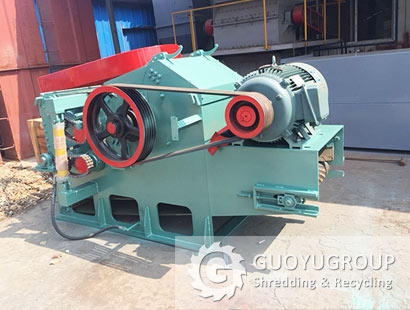
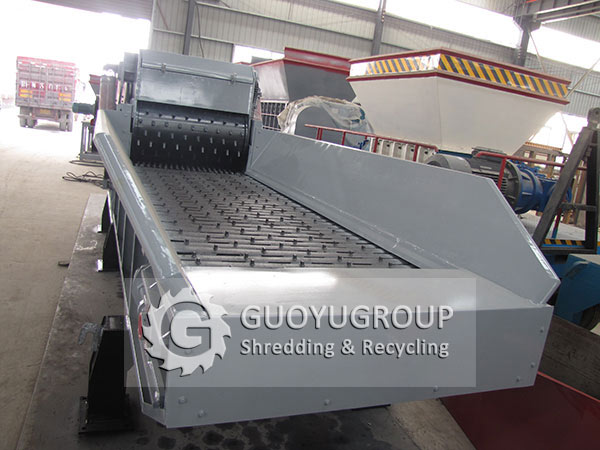
Features of commercial wood chipper
- Easy to operate, simple to maintain, durable,
- The wood chipper is composed of a drum cutting system, which has high working stability and is equipped with an automatic feeding design, which can greatly improve the working efficiency of the machine.
- The structural components of the wood chipper are all made of high-quality steel, which are precision processed and welded by various CNC equipment to ensure the firmness and durability of the machine.
- The discharge port is high, and is equipped with a deflector to adjust the discharge angle, so that the discharge can be concentrated to the designated position, which greatly facilitates the recovery of the crushed material.
- The key accessories such as the drive and electric control of the chipper are all selected from well-known brands, with stable and reliable performance.
How do wood chippers work?
Wood chippers are machines whose purpose is to either chip wood or, more poetically, to turn large amounts of wood into smaller, more refined wood chips.
The machine will typically consist of several components, including the hopper and collar, chipper, collection bin, and chipper. The engine, like any high-powered machinery, will be powered either by fossil-fuels (or electricity) and connected to the blades by pulleys or v-belts controlled by a drive box. These systems work together to pull the blades along with the pulley at a speed and power that is set by the internal gears.
The chipper’s blades will work on separate shafts or intermesh. Both offer different speeds and chipping accuracy. The matter is then divided between two chutes. One will shred the trees and put it in the bucket. The other, which has additional tools, will mulch the material (leaves, etc.). The larger mulching chute is the one that will be used.
Industrial wood chippers may also have layers attached to their interior that act as bark chippers. These chains are used to remove bark from the wood being processed. There may be variations in the way the chipper chips the trees depending on what type it is. Here’s an example of a flail chipper.
Different types of commercial tree chippers
There are many commercial tree chippers. Hand-fed chippers may not be suitable to shredding wood or chipping heavy-duty wood.
You will need to select commercial whole tree choppers with high capacities and heavy-duty.
Let’s take a look at some of the different types of heavy-duty mechanical tree choppers you might come across.
Electric Wood Chippers
The commercial sector has a lot of wood chippers that are powered by electric motors. These wood chippers can be stationary or mobile.
These wood chippers are large enough to be used in large factories or other commercial establishments that need to cut and shred larger trees and branches.
Diesel-powered Shredders and Chippers
The diesel-powered wood chippers can be huge and mobile. They are larger than electric shredders and chippers, but they also have more power.
Diesel chippers can be used to cut and shred larger trees and branches.
There are many models available for diesel-powered chippers.
This could include shredder vacuums or chippers that use the walk behind technology. You can also opt for simple chippers that do not have shredding capabilities. You could also choose to have both shredding and chipping capacity.
These machines can chip and shred branches up to 3 cm in diameter. They are capable of cutting branches up to 18 cm in length. Heavy duty jobs can be performed by diesel-powered wood chippers. These wood chippers can be used in factories, farms, and other municipal jobs, as they are mobile.
Power Take Off (PTO), Chippers
PTO wood chipspers are primarily suited to professional applications and farms.
These wood chippers are powered by a tractor’s drive shaft. These PTO wood chipspers can handle branches up to 20 cm in diameter. These chippers can handle heavy-duty jobs.
PTO chippers have an auto-feed system which drags the debris into the hopper, and then through the drums to make wood chips or mulch. These PTO chippers won’t work unless your tractor is available.
What Are Some Things to Consider Before You Buy A Wood Chipper?
These are some things to consider when looking to rent or buy a wood chipper.
1. Power Source
When renting or buying a wood chipper, the power source should be your first consideration. An electric model can be purchased if you have an electrical outlet nearby. A gas-powered model is best if you don’t have electricity or require wood chipping with a diameter of more than 2 inches.
2. Engine Power
The engine’s power is the second thing you should consider. Engine power is measured in horsepower. A small wood chipper should have a motor of 1 1/2 to 2 horsepower. A wood chipper that is used frequently or has to handle heavy loads of hardwood chips might be a better choice.
3. Chipping Reduction Ratio
This ratio will determine how much chipping the chipper can produce. A ratio of 10 to 1 is the ideal ratio for wood chippers. This means that there should be a 10:1 reduction in the ratio. Wood chips will shrink if the ratio is higher than this. A higher reduction ratio means you will need more power. A larger engine will often mean a higher price and more power.
4. Self-Feeding Chipper Or Manual
Fourth, you need to decide whether you want a manual or self-feeding chipper. A self-feeding chipper will feed the wood directly into the machine. The machine will then do the rest. It is important to feed the wood at a steady rate. You will need to feed the wood yourself into a manual wood chipper.
Self-feeding is a great way to save time if you have lots of wood to chop. The machine will draw in the logs and then chip them.
5. Chipper Throat Size
The width of the opening that allows wood to enter the chipper throat is called the chipper throat size. You can put more wood into the chipper throat if it is larger.
If you are cleaning hardwood debris, consider renting equipment that has a larger throat.
6. Limit on Feed Capacity
The chipper’s feed capacity limits the wood you can place in it. This number will limit the amount of wood that can be chipped in one session. It also limits the size of the jobs you can complete.
7. Portability
A wood chipper’s portability is its ability to be moved from one place to the next. A portable wood chipper is more convenient to transport than a stationary model.
Wood Chipper Push or Tow behind
A push-behind woodchipper is one that you can carry around as you walk. They will turn on two wheels and are light enough to be moved by hand. Tow-behind wood chippers are wood chipsters that attach to your truck, ATV, or mower and can be pulled along with you.
Weight
You would need to obtain additional transport licensing for larger wood chippers, which will increase your costs. Smaller wood chippers, on the other hand can be pulled by small cars and do not require a transport license.
8. Accessibility and size to your property
The size of a wood chipper is its length, width and height. Your wood chipper will move more easily if it is easy to access your property. It is not a good idea to hire a woodchipper and then find out that it cannot be accessed through your backyard gate.
Storage
These machines aren’t small, though. These electric wood chippers can be stored in your garage or basement. Gas machines, on the other hand, will need to go in a barn or shed with easy access.
9. Safety Personal Protective Equipment
Safety is essential when using a wood chipper. When the wood chipper is in use, there is a risk that material, clothing, and other items could be drawn into it. This should be considered before you start using it. If you don’t have personal protective equipment (PPE), wood chips can get in your eyes, mouth, and lungs.
10. Noise and Mess
A gas-powered wood chipper equipped with a chute will require significant cleaning. Wood chips will be all over the place. After using my wood chipper, I use a leaf blower.
Consider your neighbors. These machines are loud. While electric machines are fine, gas chippers make a lot of noise while they’re running.